
JUDY NEWMAN • LIFE OF A READER • MARCH 2026
Life of a Reader (and a Writer): Never Hide from Your Readers
by Judy Newman
Over the past few years, I wrote a series of children’s books that I truly love: The Bobs and Tweets. These rhyming chapter books star best friends, Lou Tweet and Dean Bob—who are very different from their respective families: Lou is very messy, living in a family of neat freaks, and Dean likes a tidy and orderly life, but his family of Bobs are truly slobs. Lou has a snarky cat (Pretty Kitty), and Dean has a loyal and boisterous dog (Chopper).
Lou and Dean live on Bonefish Street, a quirky community filled with great teachers, interesting kids and adults of all ages, fun neighborhood activities, assorted pets, and sometimes mayhem!
I believe in listening carefully to children—not talking over them or for them or using them as a mouthpiece to get your own point of view across—and I think the Bobs and Tweets books shine a light on how important it is to hear what kids are saying. The books have an edge and are funny, which I think kids reading alone—and their grown-ups reading aloud—appreciate. I like rhyming books (although they are very hard to write) because the rhythm and cadence help new and developing readers along.
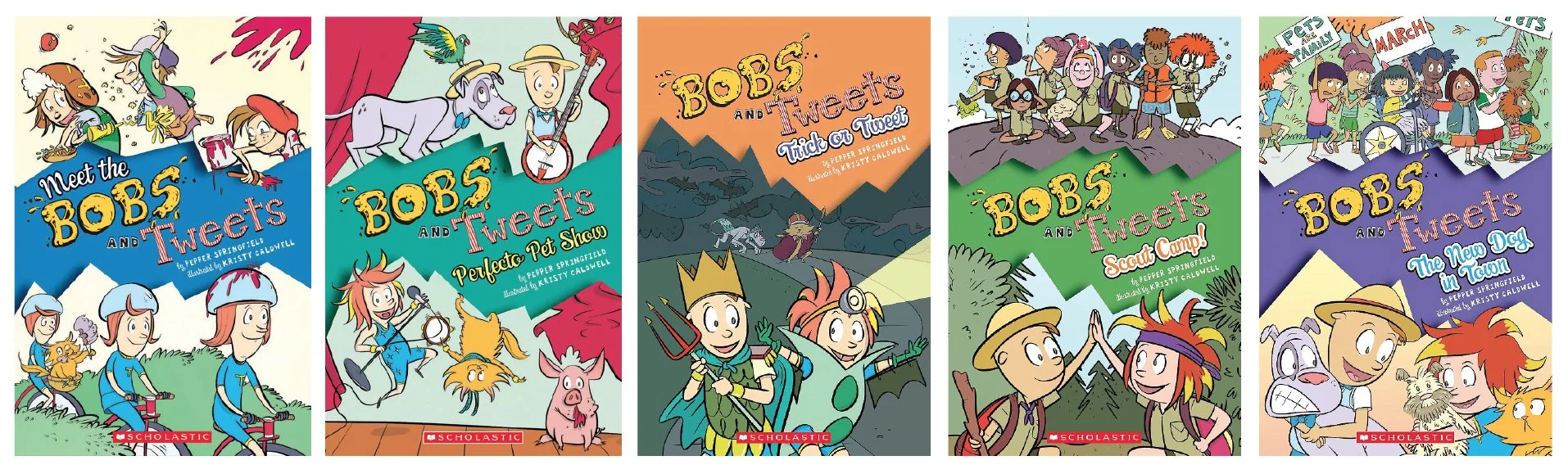
There are five books in the series, published by Scholastic: Meet the Bobs and Tweets; Perfecto Pet Show; Trick or Tweet; Scout Camp!; and The New Dog in Town. They are illustrated by the brilliant and truly lovely award-winning kids’ book illustrator, Kristy Caldwell. I am working on the sixth book in the series, which is taking a while to come together, but I hope to be out with it someday soon.
While I get very small royalty checks from book sales, the Bobs and Tweets never became the big hits I wanted—and still want—them to be.
I don’t really know why Lou and Dean and their families—the neat Tweets and the messy Bobs—have not yet found a larger audience. The rhyming chapter book format is challenging to market because no one is sure what age group the books are geared toward. I say “all ages” with a focus on first to fourth grade, but I do hear from parents who like reading the books aloud to their children in PreK, and I hear from older kids who feel good about reading them on their own.
Without going too deep into a self-critical black hole, I tried to think of reasons why the books didn’t sell well. Maybe because they are printed with full color illustrations, so they are expensive to produce in the “paper over board” (hardcover) format. Maybe the recommended age level(s) wasn’t clear. Maybe, despite being professionally edited and published by a reputable publishing company and illustrated by an award-winning illustrator, they weren’t as good as I thought. Maybe I didn’t get the metadata right. Maybe this. Maybe that.
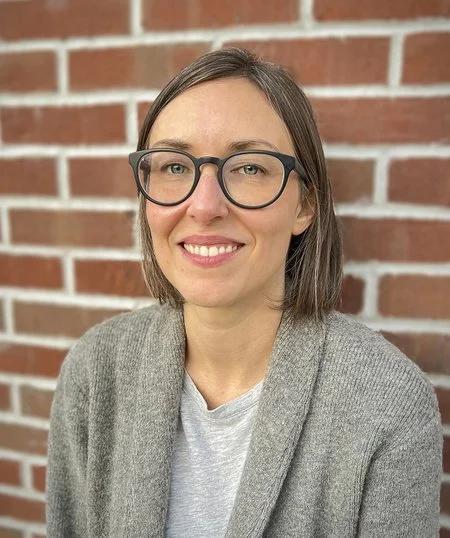
Kristy Caldwell, illustrator of the Bobs and Tweets series and many other wonderful children’s books. Visit her at kristycaldwell.com.
Or maybe it was a marketing and awareness problem. I was working full-time when these books were published, so I didn’t really have the bandwidth to go out on the road and do school visits with Lou, Dean, and all the Bonefish Street gang—which is a great way to share your books directly with kids. I have spent most of my career helping authors share their books with students, teachers, and families through classroom book programs and in many other interesting ways … but I wasn’t able to do that for myself.
A big stumbling block for me, and I think the real reason the Bobs and Tweets never reached a broad audience, is because I was terrified to publish them under my own name and go out “on the road” and talk about them. I was so worried about no one liking the books. I was worried about being outed as a children’s book expert who didn’t know how to write good books herself. I was terrified of getting bad reviews and of no child liking my characters and their stories.
So, I leaned into my imposter syndrome and hid behind a pseudonym: Pepper Springfield. And I didn’t do all the hard work you have to do to connect your books to real kids.
My first name, “Pepper,” came from my brain, and the last name “Springfield” came from my dearly beloved friend and colleague, the late Betsy Howie, who sent me a video of her then 12-year-old daughter, Callie, performing a tap dance number to a Dusty Springfield song. Callie—now a big TikTok sensation—probably has no idea she inspired my pseudonymous last name, but she did.
So while Pepper provided cover, she also prevented me from being fully committed to sharing my books and my story. I couldn’t go out and proudly read and talk about my Bobs and Tweets books in bookstores, libraries, and schools … wherever kids discover books. I did one or two school and bookstore visits (always well received), but I was very tentative.
And it was confusing to readers: “Pepper Springfield?” kids and teachers would ask. Who are you? And kids who really have excellent “BS” meters could sense that I was hiding.
I googled the reason authors use pseudonyms, and this is the answer I got, which sadly, rings true for me:
Authors use pen names (pseudonyms) primarily to protect their privacy, separate personal life from professional work, and manage branding across different genres. Common reasons include avoiding embarrassment with employers or family, adopting a more marketable name, or enabling a fresh start if previous work was unsuccessful.
Recently, a fourth grader whose mom I know came across the Bobs and Tweets at the amazing New Orleans Book Festival. She told her mom she loves the series. She even wore a Bobs and Tweets t-shirt on a school field trip to the State House.
Her enthusiasm for the Bobs and Tweets got me thinking again about these books I love. I want to re-dedicate myself to the series, get the sixth book done (if Kristy is game), and focus on sharing the stories as broadly as possible—under my own name.
As an author, I realized that sometimes it only takes one vote of encouragement—from one wonderful reader—to get over myself and start talking up the books I love.
I want to send that message loudly to all my fellow authors. I have worked with so many of you for decades (as President of Book Clubs, Direct to Home, and e-Commerce, and as Chief Impact Officer for 33 years at Scholastic). Keep finding ways to share the books you create with children and their families and teachers. Take a page from Jerry Pallotta, author of the Who Would Win?® series—featured in The Atlantic. And embrace storyteller meccas like Story Monsters Ink, who lift up and celebrate authors.
Never hide from your readers!
I have a list of ways to connect readers to your books. You can check out some of my ideas beginning in this column on May 1.
–Judy
Judy Newman, Chief Impact Officer Emeritus, Scholastic